
Ask any ten people about root canal treatment and at least eight will make a face. It is probably the most feared treatment in dentistry. But here is the honest answer that surprises most of our patients: a root canal does not cause pain, it removes pain.
The short answer
No, a root canal is not painful. The tooth is fully numbed before we begin, so during the treatment you feel pressure and vibration rather than pain. What hurts is the infection inside the tooth, and the root canal is what takes that away. Mild soreness sometimes for two to three days after the treatment is normal and subsides with the prescribed medicines.
In this article we will explain why root canals got such a bad reputation, what you will actually feel at each stage, and why root canal treatment in Mohali today is nothing like what your parents went through twenty years ago.
Why do people think root canals are so painful?
This fear is not without reason. It comes from how the treatment used to be done decades ago.
Back then, dentists used hand files to clean the canals, which took a long time and meant sitting with your mouth open for hours. Anaesthesia was not as effective as it is today. Patients had to come back three or four times over several weeks. And most people only visited the dentist when the tooth was already badly infected and swollen, which makes numbing much harder.
So an entire generation walked away with bad memories, and those stories got passed down. The treatment has changed completely since then. The reputation simply stayed behind.
The pain comes from the infection, not from the treatment
This is the part most people get wrong.
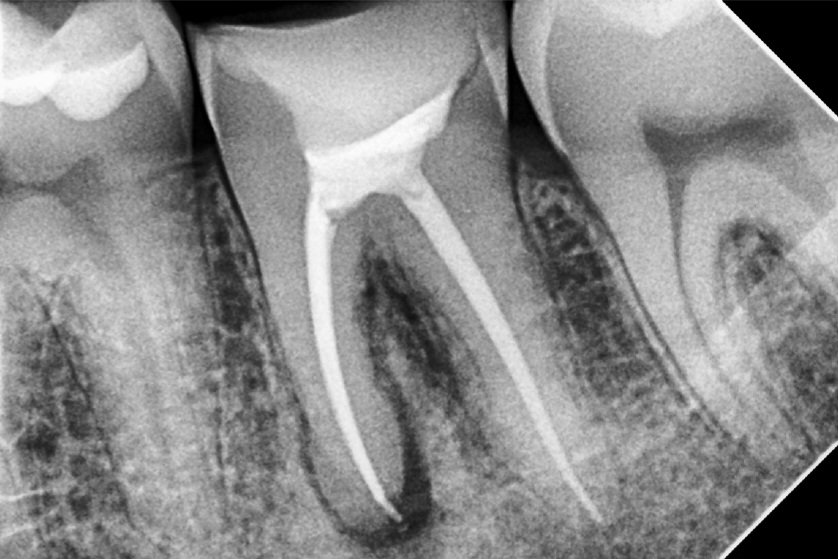
Inside every tooth there is a soft tissue called the pulp, which holds the nerve and the blood supply. When decay reaches this pulp, it becomes infected and inflamed. Because the pulp is sealed inside a hard tooth, the swelling has nowhere to expand, and that trapped pressure is what causes the severe throbbing pain.
That is the pain that wakes you at 2 in the morning. That is the pain that makes a cup of cold milk, an ice cream or a cup of hot tea unbearable. It is the infection doing all of it.
A root canal removes that infected pulp completely. Once it is out, the source of the pain is gone. This is why so many of our patients tell us they felt relief on the very same day.
What you feel at each stage
Pain level from the day the tooth starts hurting to one week after treatment.
Severe
Infected tooth, before treatment
A small pinch
The numbing injection
Only pressure
During the treatment
Mild soreness
First two to three days
Nothing
After about a week
What you will actually feel, step by step
Here is what really happens in the chair, in order.
Numbing the tooth
We first apply a numbing gel on the gum, then give the local anaesthesia injection. Because of the gel, most patients feel only a small pinch, and some feel nothing at all. We then wait a few minutes and test the tooth. We never begin until you are fully numb.
Opening the tooth
You will feel pressure and some vibration, much like getting an ordinary filling done. No pain.
Cleaning the canals
This is the main part of the treatment, and it is also the part where you feel the least discomfort, because the nerve has already been numbed and removed. Most patients find this stage completely uneventful.
Sealing the tooth
Again, just a feeling of pressure as the sealing material is placed inside the cleaned canals.
Most patients tell us afterwards that the worst part was the sound of the instruments, not any pain at all. Many say it was far easier than they expected after all the stories they had heard.
How modern technology has made it almost painless
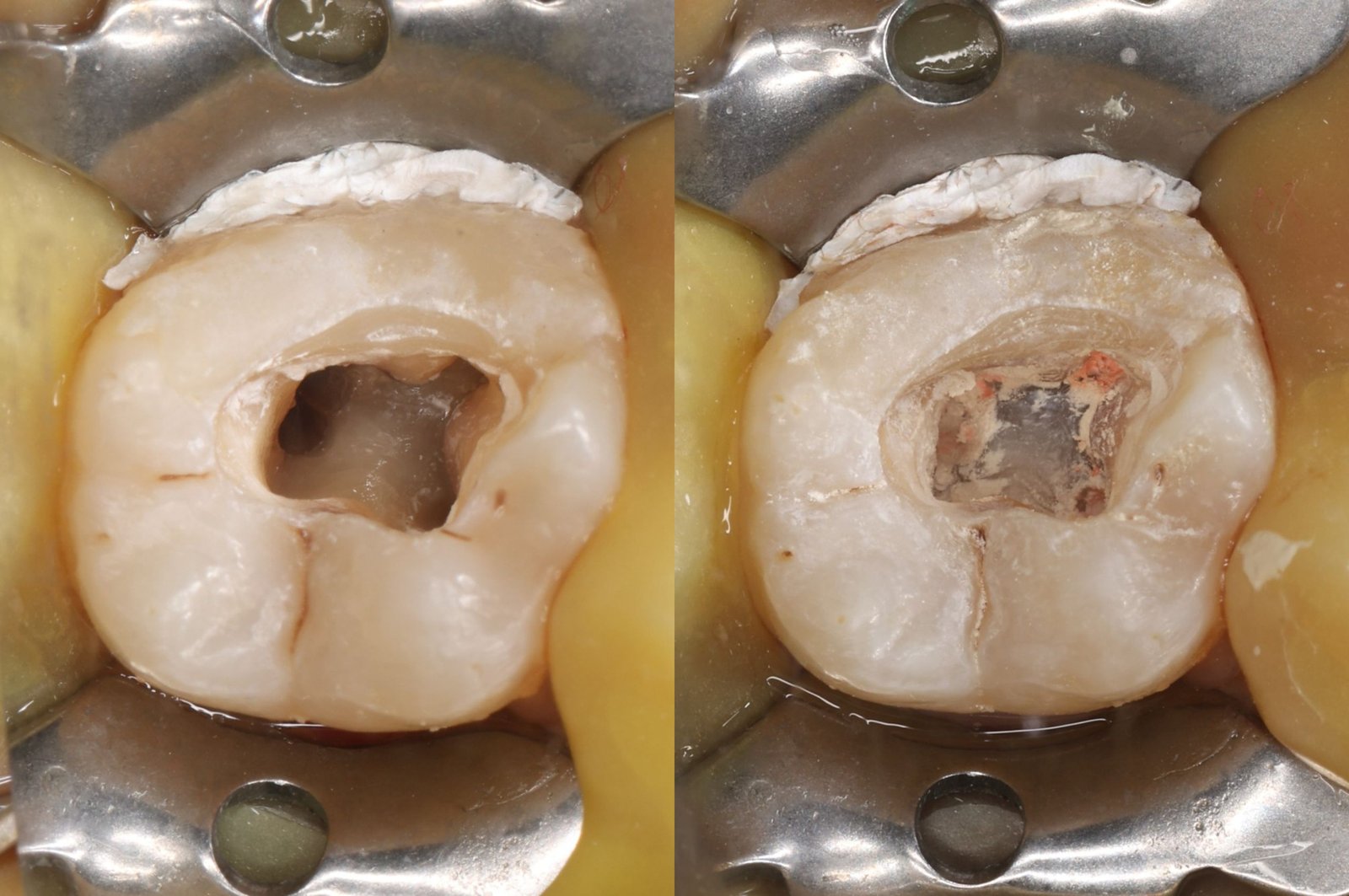
Four things have changed the experience completely.
Laser technology
Laser disinfects the inside of the tooth without the heavy drilling and vibration that patients dislike most. It kills bacteria more effectively and is gentler on the surrounding tissue.
Rotary instruments
These clean and shape the canals in a fraction of the time hand files used to take. Less time in the chair means far less discomfort. They also clean and disinfect the canal better, which reduces the chance of reinfection in a treated tooth.
Digital X-rays and magnification
We get the image instantly and can see the canals clearly, so there is no guesswork and no waiting between visits. Magnification from 5x up to 15x lets us look inside the canals right up to the tip of the root, so we can be sure the infection has been removed completely.
Better anaesthesia
Today's anaesthetics work faster, go deeper and last longer than anything that was available twenty years ago. Syringes and needles have improved too, so the sensation of the anaesthetic going in is next to nothing.
Together these have made painless root canal treatment an ordinary, everyday procedure rather than something to be scared of. They are also the reason most cases can now be finished in a single sitting instead of three or four visits.
Will it pain after the root canal?
Let us be honest here, because we would rather set the right expectation than make a big promise.
This is normal
Mild soreness or tenderness when you bite, for two to three days. It reduces a little every day. This is not the infection returning, it is simply the tissue around the root settling down. The medicines we prescribe handle it easily, and most patients are eating normally again within two or three days.
Call us instead of waiting
Severe pain, swelling of the face, or fever after the treatment. This is uncommon, but it does need to be checked quickly. Do not wait for it to settle on its own, and do not manage it with extra painkillers at home. Never hesitate to call your doctor if you have any doubt at all. We are here to give you whatever help you need.
Five things that make the appointment easier
- Do not delay it. A mildly infected tooth is easier to numb than a badly swollen one. Coming in early genuinely makes the treatment more comfortable.
- Tell your dentist you are nervous. There is nothing embarrassing about it. When we know, we go slower, explain each step and check in with you more often.
- Eat something before your appointment. You will not be able to eat for a few hours after, and it is better not to sit in the chair on an empty stomach.
- Take a morning appointment. You will be less tired and more relaxed than at the end of a long working day.
- Take the prescribed medicines on time. Do not wait for the pain to start before taking them.
What happens if you keep delaying?
This is the part worth thinking about seriously. The fear of pain makes many people postpone treatment for months, and in almost every case the situation gets worse rather than better.
The infection spreads from the tooth into the bone around it. An abscess can form, causing swelling of the face. The tooth becomes weaker and may crack. Eventually it cannot be saved at all, and extraction becomes the only option left.
Replacing a lost tooth with an implant or a bridge costs far more than a root canal and takes much longer. The treatment you are avoiding out of fear of a few hours of mild discomfort is the very thing that saves your tooth.
Still worried about the pain?
Come in for a consultation first. We will check your tooth, explain exactly what your case needs, and tell you the cost before anything is started. No treatment begins until you are comfortable.
See our root canal treatmentFrequently asked questions
